


All Products
-
 Global Power Solution EngineerStable quality, on-time delivery, reliable long-term partner.
 -
 Gulf Electrical Engineering SeProfessional technology and perfect after-sales service.
 -
 International Power Research LCustomized solution meets our project requirements perfectly.
 -
South America Electric Power PProfessional team, good communication and stable supply.

Single Phase TTR Tester Transformer Turns Ratio & Vector Group Analyzer with Printer


| Place of Origin | China Mainland |
|---|---|
| Brand Name | MINGYANG |
| Model Number | MY-BC |
| Minimum Order Quantity | 1 |
| Price | 8000usd |
| Packaging Details | carton |
| Delivery Time | 1 week |
| Payment Terms | L/C,D/A,D/P,T/T,Western Union |
| Supply Ability | 1000pcs/month |
Product Details
| Type | Testing Machine | Protection Class | IP65 |
|---|---|---|---|
| Accuracy Class | High Accuracy | Power | 200w |
| Relative Humidity | 90%, No Dew | Working Power Supply | AC220, 50/60 Hz(Can Be Customized) |
| Display | 5.6-Inch Touch LCD | Resolution | 10~99.999 (0.001) |
| Warranty | 2 Years | Ccustomized Support | OEM, ODM |
| Place Of Origin | Hubei, China | ||
| Highlight | High Accuracy TTR Tester,Portable Design Transformer Turn Ratio Tester,5.6-Inch Touch LCD Electronic Transformer Tester |
||
Product Description
Single Phase TTR Tester Transformer Turns Ratio & Vector Group Analyzer with Printer
Product Description
Advanced electronic transformer turns ratio tester designed for precision measurements with high accuracy and comprehensive functionality.
Product Alias
Single‑phase transformer turns ratio tester / single‑phase TTR meter / transformer ratio test set / single‑phase transformer vector group tester / portable transformer turns ratio analyzer / single‑phase transformer transformation ratio tester
Features
1.Blind measurement capability for ratio and group testing without high/low voltage connections
2.Extended application range including Z-type transformers, PT samples, and CT polarity testing
3.Wide measurement range up to 10,000 with guaranteed 0.3% accuracy at maximum range
4.Comprehensive protection features including reverse connection and output short circuit protection
5.5.6-inch industrial high-brightness color LCD screen, visible even in direct sunlight
6.Built-in printer for convenient data printing and documentation
7.Dual storage capability with local memory and USB memory support
Product Parameters
| Range | 0.9 ~ 10000 |
| Accuracy | ±(Reading×0.1%+2 digits)(≤500) |
| ±(Reading×0.2%+2 digits)(500<reading≤3000) | |
| ±(Reading×0.3%+2 digits)(reading>3000) | |
| Resolution | 0.9~9.9999(0.0001) |
| 10~99.999(0.001) | |
| 100~999.99(0.01) | |
| 1000~9999.9(0.1) | |
| 10000 and above(1) | |
| Power Supply | Built-in battery or external charger,charger inputconditions 100-240VAC,50/60Hz. |
| Tester Weight | 3.5KG |
| Tester Dimension | 260mm(L)×220mm(W)×160mm(H) |
| Operationg Temperature | -10ºC to 50ºC |
| Relative Humidity | <90%,non-condensing |
Application Scenarios

FAQ
Question 1: Measured turns ratio has obvious deviation compared with transformer nameplate value
Customer: When testing single‑phase transformer on‑site, the measured turns ratio data differs greatly from the nameplate marked value. The instrument runs without alarm. What should I check?
Manufacturer: First, double‑check high‑voltage and low‑voltage test cables, ensure HV and LV clips are connected to corresponding transformer terminals, avoid interchanging high‑side and low‑side wiring. Second, inspect the transformer terminal contacts; rust, paint or dirt will cause poor contact, polish connection points and fasten alligator clamps tightly. Third, confirm the tap‑changer gear position of the transformer is consistent with the tap parameter set on the tester. Complete above checks and perform retest. If deviation still exists, verify whether the transformer has internal winding short‑circuit fault.
Question 2: Automatic vector‑group identification fails during testing
Customer: The tester cannot automatically identify the vector group of single‑phase transformer, and keeps prompting judgment failure. How to solve this issue?
Manufacturer: Incorrect wiring is the primary cause. Confirm each high‑voltage and low‑phase terminal corresponds correctly, phase‑swap connection will lead to identification failure. Make sure the tested transformer is fully power‑off and reliably grounded. Keep test cables far away from adjacent live power lines to reduce electromagnetic interference. Check whether the transformer winding has hidden short‑circuit defect. Restart the tester, re‑wire strictly following manual, then start the measurement again.
Question 3: Instrument boots normally but cannot start the test procedure
Customer: The device powers on, screen display and keys work normally, but the test will not trigger after pressing the start‑test button.
Manufacturer: Check all test cable connections, confirm every alligator clamp makes good electrical contact with transformer terminals, no open‑circuit situation. Confirm you have selected the correct single‑phase transformer test mode in software menu. Check whether external ambient interference is too strong. Reboot the whole instrument. If the fault persists after these operations, please stop testing and contact manufacturer support, do not disassemble the instrument housing by yourself.
Question 4: Built‑in thermal printer does not print test reports after measurement completion
Customer: The single‑phase turns ratio test finishes successfully, but the printer outputs blank paper or cannot feed paper.
Manufacturer: First check the thermal paper installation direction; thermal paper only prints on one side, reverse‑installed paper will output blank content. Check for paper jam inside the printer compartment, clear paper scraps if there is jam. Confirm print‑output function is enabled in system setting menu. Install brand‑new thermal paper roll and try printing report again. If the printer still does not work, check whether printer hardware is damaged.
Question 5: What precautions for field substation test with this portable TTR tester
Customer: We frequently conduct single‑phase transformer turns ratio test in substation field, what safety and operation points need attention?
Manufacturer: The transformer under test must be completely de‑energized and well‑grounded before connecting any test cables. Never plug or unplug test clips while the tester is running. Avoid operating under heavy rain, high‑humidity or dusty environment. Arrange test cables neatly, prevent cables from squeezing or pulling. After finishing each test group, save test data before powering off the instrument. If thunderstorm occurs on‑site, terminate all test work immediately, disconnect instrument from external circuit.
Question 6: Shipping Method
Customer: If we place an order, how do you typically ship the goods? Will there be any issues with transporting bulky items such as reactors?
Manufacturer: We default to using dedicated logistics lines or brand-specific express shipping services; small-sized main units and accessories may also be shipped via standard courier services. Large items, such as reactors and excitation transformers, are packed using wooden crates or wooden frames for reinforcement to prevent bumps and moisture exposure during transit; a packing list is included with each package to facilitate item-by-item counting for you. Logistics costs are typically determined by both parties in accordance with the contract terms; after shipment, we will send you both the tracking number and the carrier's contact phone number for easy tracking.If your project site is remote or if delivery to the site is required with a specified logistics company, please inform us in advance when placing your order; we can then coordinate and arrange accordingly.
Question 7: Delivery Lead Time
Customer: Our project is under tight deadlines; how long will it take for the order to be shipped after we place it? Can we request expedited shipping?
Manufacturer: Standard specifications – stock available; typically delivered upon receipt of the order. Orders can be shipped within [X] working days; for non-standard products requiring customized voltage levels, capacities, or reactor combination configurations, the production cycle typically ranges from [X] to [Y] days.The delivery time will be approximately 7-15 working days; the specific timeline shall be subject to the sales confirmation provided upon order placement. If your project has a tight schedule, please inform us of the latest expected delivery date before placing your order; we will first verify the production schedule and inventory status, and where possible, will coordinate expedited production and prioritize shipment. However, it is recommended to allocate sufficient transit time for logistics to avoid delaying on-site testing.
Question 8: After-sales Service and Warranty
Customer: What is the warranty period for this equipment? If any issues arise during on-site use, how will your after-sales service respond?
Manufacturer: We provide a two-year free warranty on the entire unit and lifelong technical support services. During the warranty period, if issues arise due to defects in the equipment itself, we will provide free repair or replacement of components; when problems occur on-site, we commit to responding within 24 hours; most wiring and parameter configuration issues can be resolved through remote guidance via video or telephone; for cases where an on-site visit is necessary, we will arrange for our technicians to arrive at the location to resolve the issue. After the warranty period expires, we still offer repair services, with spare parts supplied at cost price for the long term, and software updates provided free of charge for life. Upon delivery of the equipment, we also offer free operational training (video operation guides)to ensure that your testing personnel can operate the equipment independently and proficiently; should you have any further questions, please feel free to contact our dedicated after-sales hotline directly.
Question 9: Shipping methods for each region (Sea freight)
Customer: Our projects are distributed across several states, and our procurement volumes are substantial; are the shipping methods consistent across all states? How is the delivery time calculated?
Manufacturer: The specifications are identical; however, it should be specifically noted that this equipment set is large in size and heavy in weight—components such as the reactor and excitation transformer are all classified as heavy components. Therefore, regardless of which state or region the shipment is destined for, we will uniformly utilize sea freight transportation. The packaging employs export-grade wooden crates with reinforced structures, along with moisture-proof and rust-proof treatments; the design of these wooden crates is optimized for long-distance sea transport and multiple lifting and transshipment operations. Upon arrival at the destination, simply unpack the goods and conduct an inspection before putting them into use. Regarding delivery time, the sea freight transit period depends on the port of destination: near-sea routes are generally faster, whereas ocean routes may take longer; the exact number of days will be confirmed based on the shipping schedule specified in the bill of lading. We have a dedicated freight forwarding agency to handle booking of shipping space, customs declaration, insurance, and other related procedures; once the vessel departs, we will send you documents such as the bill of lading and the packing list, enabling you to arrange for the receipt of goods at the port of destination and their inland transshipment in advance
Shipping scenario
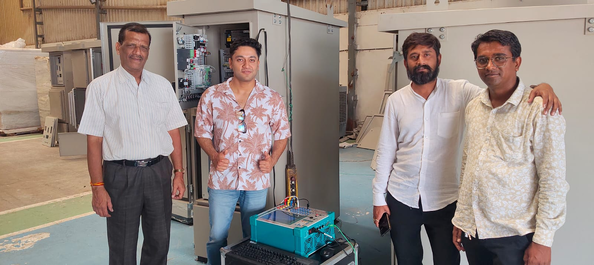
Scene (One)
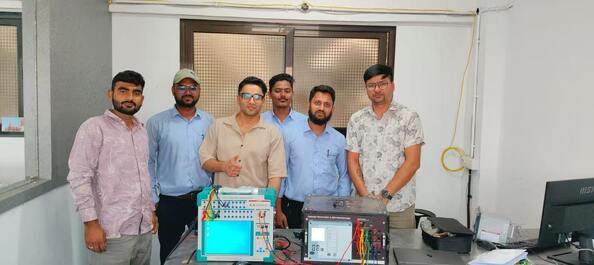
Scene (Two)
Attachment Directory
Attachment Image
Recommended Products